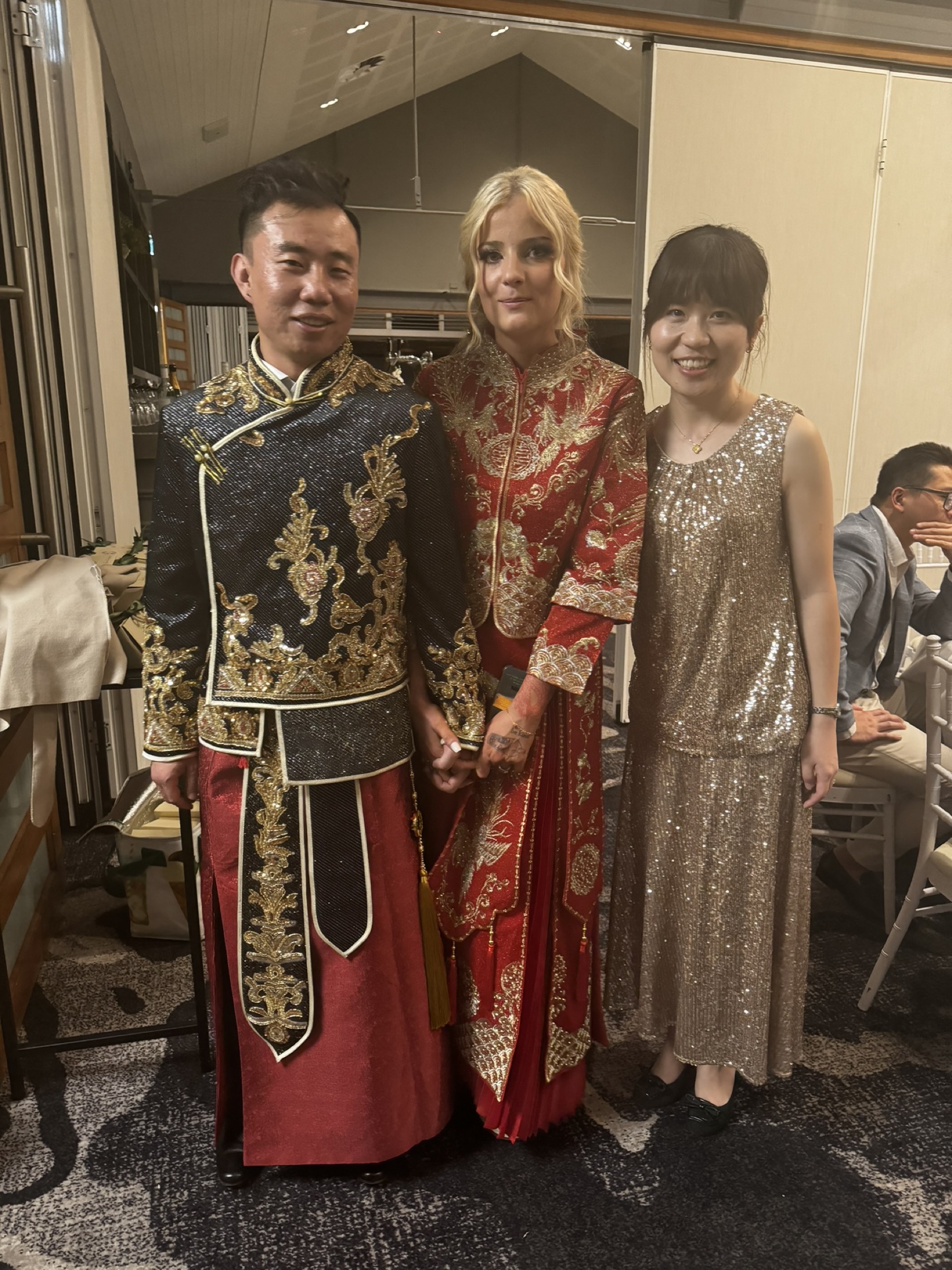
A bilingual ceremony works best when it is designed as one shared experience—not two separate ceremonies placed beside each other. Your guests do not need a literal translation of every sentence to feel included. They need warmth, context and a clear sense of what each moment means to you.
Begin with the traditions that matter
Talk together about the customs, languages and family stories you want to honour. This may include a tea ceremony, a particular blessing, family introductions or music that makes a relative smile. Keep what feels meaningful and leave out what does not. The most moving ceremonies are never a checklist of traditions; they are a reflection of the couple and the people who raised them.
Use language with purpose
Your celebrant can introduce a ritual in both languages, capture the heart of a reading without repeating it word for word, and make sure key legal moments are clear. Vows, welcomes and family acknowledgements are especially powerful places to let both languages be heard. This approach protects the ceremony’s natural rhythm while ensuring grandparents, friends and overseas guests feel part of it.
Plan the tea ceremony with care
If you are holding a tea ceremony, decide whether it happens before the main ceremony, during it or at the reception. Confirm who is being served, the order of family members, the space needed and who will guide guests through the meaning of the ritual. Allow time for photos, embraces and the small emotional pauses that make the tradition so special.
Give families a shared role
Bilingual weddings are a beautiful chance to bring families together. You might invite parents to offer a blessing, ask siblings to read in their first language or explain the significance of a meaningful gesture. These small moments turn spectators into participants—and create memories that travel across languages.
Quick answers
- Does every part need to be repeated in both languages?
- No. A skilled bilingual celebrant can keep the ceremony flowing while making sure each guest understands the meaning and key moments.
- Can we include a Chinese tea ceremony in a civil wedding?
- Absolutely. A tea ceremony can be held before, during or after your legal ceremony, depending on your timeline and venue.
- Can overseas family be included?
- Yes. Consider a livestream, a recorded message or a bilingual welcome so distant loved ones feel present in the celebration.